
About the Book
What the Rust Knows
A spoiler-free guide for prospective readers.
Is this literary fiction or a thriller?
This is literary fiction with the bones of a slow-burn drama. While it carries the moral weight and tension you might associate with a thriller, its engine is character, memory, and conscience rather than incident. Readers drawn to interior, ethically searching novels will find themselves at home.
Is there action?
Not in the conventional sense. The drama unfolds largely through conversation, presence, and the charged quiet between people who share a long history. Tension is generated by what is at stake morally and emotionally rather than by physical events. Expect a deliberate, measured rhythm where pressure builds through dialogue and atmosphere.
What themes does it explore?
The novel circles questions of conscience, complicity, and the cost of doing the right thing. It examines how people build private structures to live with difficult choices, what we owe to those who came before us, and the complicated relationship between forgiveness and accountability. These ideas are explored as live, unresolved tensions rather than settled lessons.
What kind of atmosphere does it have?
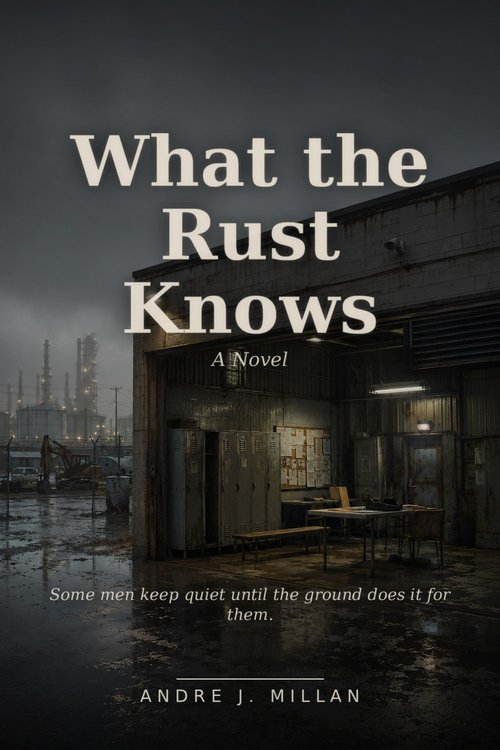
Spare, grey, and quietly haunting. The setting—a fading industrial landscape of tank farms, chain-link, and a decommissioned park awaiting demolition—saturates every page. The prose lingers on texture and decay: rust, condensation, flat overcast light, the small sounds of a room. The mood is contemplative and weighted, with a stillness that hums under the surface.
Who would enjoy it?
Readers who love precise, atmospheric prose and patient, morally serious storytelling. If you're drawn to novels where setting becomes character, where dialogue carries enormous weight, and where the real drama lives in interior reckoning, this will reward you. Ideal for fans of restrained, literary work that trusts the reader to sit with ambiguity.