
About the Book
Fable Goes Dark
A spoiler-free guide for prospective readers.
Is this literary fiction or a thriller?
This is literary fiction with the architecture of an investigation running beneath it. While it borrows the forward momentum and inquiry of a thriller—a central question that drives the narrative, documents that surface, conversations weighted with what goes unsaid—its real attention is on interiority, language, and moral weight. Readers who appreciate the precision of literary prose and the tension of a mind working through a difficult problem will find both here.
Is there action?
Not in the conventional sense. The momentum comes from accumulation rather than incident: a question pursued, observations gathered, conversations that turn on careful phrasing. The tension is psychological and ethical, built through detail and restraint rather than physical confrontation. If you're drawn to stories where the stakes are intellectual and personal, and where a quiet exchange across a table can carry enormous pressure, this will hold you.
What themes does it explore?
The novel sits with questions about information and power, the difference between knowing something and being able to act on it, and the distance between the stories we tell ourselves and what we've actually done. It examines responsibility when it's distributed across many hands, the meaning of transparency, and what it costs to protect things—and people. These themes are explored with genuine openness, holding their complexity rather than reducing them to easy answers.
What kind of atmosphere does it have?
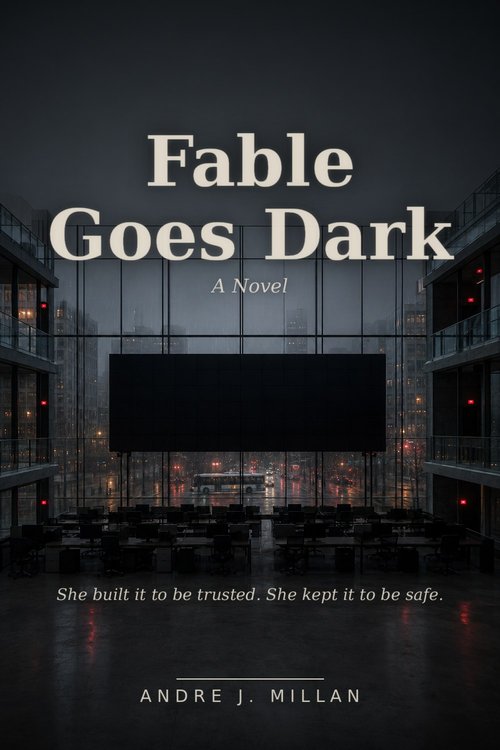
Atmospheric and meticulous, with a muted, rain-soaked palette—overcast skies, fog against glass, the hum of empty buildings. The prose pays close attention to small physical detail: light, sound, the texture of ordinary objects noticed in moments of pressure. The overall mood is contemplative and quietly charged, the feeling of a held breath sustained across the length of the book.
Who would enjoy it?
Readers who love character-driven literary fiction with intellectual and ethical stakes—the kind of novel where every sentence is deliberate and silence carries as much weight as speech. If you're drawn to writers who treat moral ambiguity seriously, who build tension through interiority and precise observation, and who trust the reader to sit with hard questions, this is for you. A strong fit for anyone interested in stories about technology, institutions, and the people who build and reckon with them.