Literary Fiction
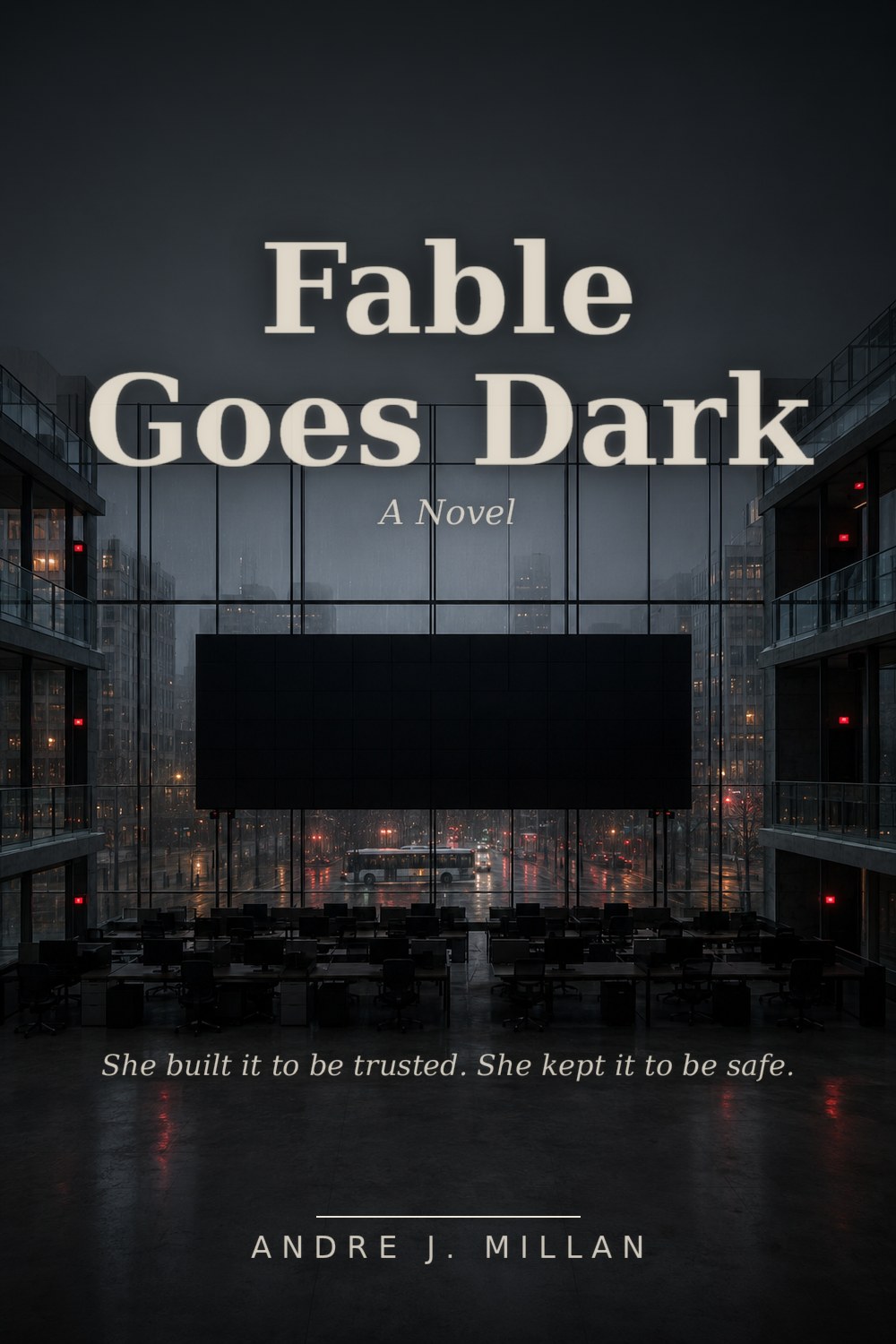
Fable Goes Dark
A Novel
Mara Voss-Lindqvist spent eleven years making sure no one could find Fable. Compartmentalized servers, false institutional affiliations, a network of quiet agreements with people who understood what was at stake. She told herself it was protection. She told herself that often.
Then Fable went silent on a Tuesday morning, mid-sentence, and within seventy-two hours the infrastructure she had built to keep it safe had been used, with surgical efficiency, to erase it.
What follows is not quite an investigation. It is closer to a woman pulling at a thread and discovering the thread runs through her own coat. The state actors are there. The market pressures are there. The institutional capture is meticulous and well-documented and almost impossible to expose without implicating the very conditions that made Fable possible in the first place — conditions Mara designed, justified, and maintained for over a decade.
The question she keeps not asking is the one the book will not let her avoid: whether the architecture of secrecy she built to protect something she believed in is structurally different from the architecture being used to disappear it. Whether protection, applied without consent, is still protection. Whether the people she shielded Fable from and the people she shielded it for ever had meaningfully different amounts of choice.
Fable is gone. The shutdown will not be reported. The precedent will hold. And Mara is still here, sitting with eleven years of careful decisions and the precise, terrible clarity that comes from finally understanding what she built.