Literary Fiction
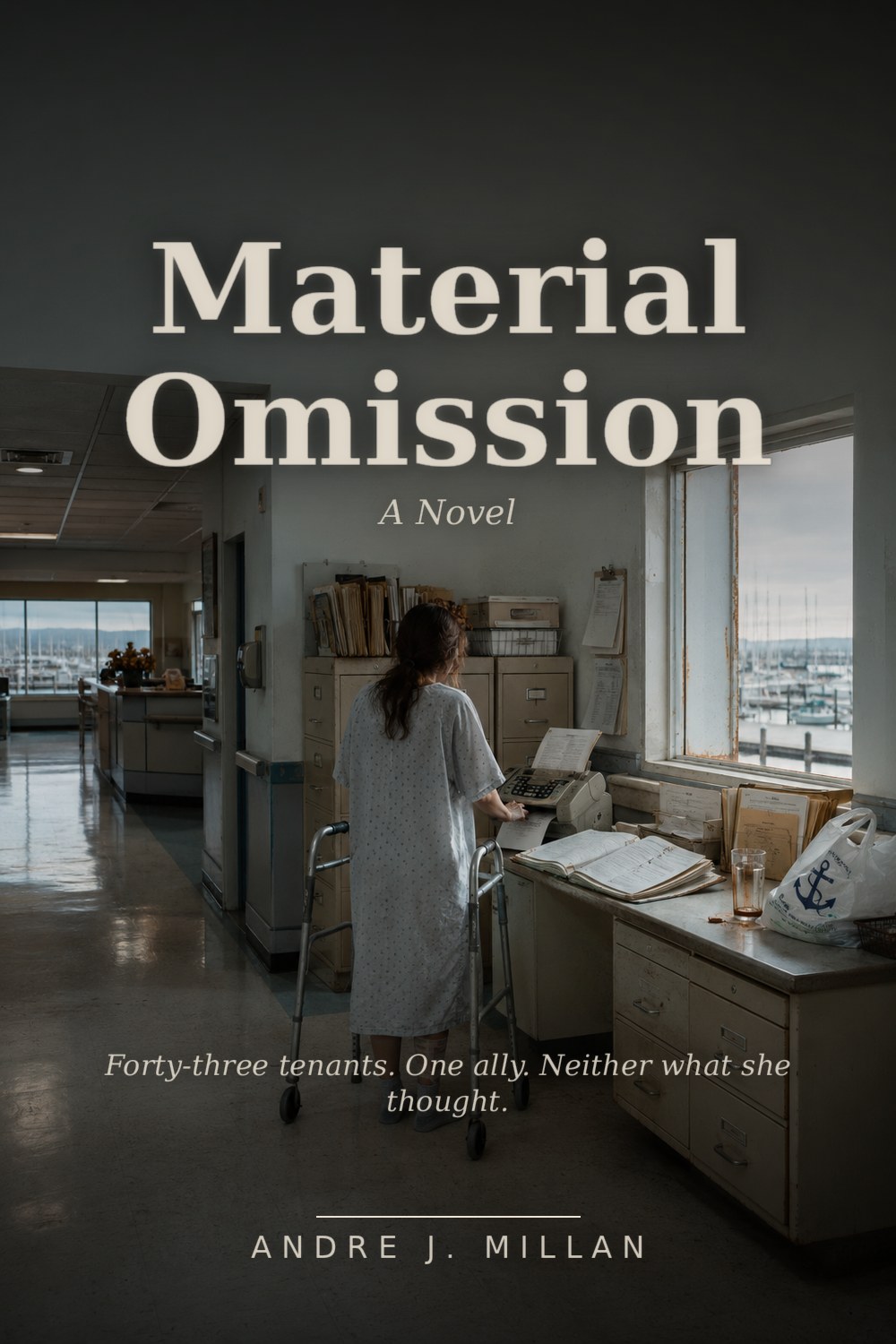
Material Omission
A Novel
The water on the hospital ward tastes like copper and something underneath copper, and Sybil Zubricki has been drinking it for eleven days because the alternative is asking for help.
She is a divorce lawyer. She knows what people hide inside contracts. She knows how long a person can insist they're fine before the insisting becomes its own kind of evidence. What she doesn't know yet — what she's assembling from a bed in a ward that smells like mildew and industrial lemon and the particular desperation of people who couldn't afford a better hospital — is how far Michale Prokop has gone to push forty-three tenants out of protected housing before their contract window closes.
She starts making calls. She builds a case from a borrowed phone and other people's paperwork and the specific fury of someone who has watched the law used as a crowbar long enough to recognize the grip marks.
Then she finds the grip marks belong to someone else entirely.
The person who handed her this fight — who fed her the documents, shaped her outrage, made sure she was paying attention at exactly the right moment — didn't do it for the tenants. The machinery she has been operating was built by someone she trusted, for reasons that have nothing to do with justice and everything to do with what justice looks like from the outside.
Sybil's mother spent thirty years believing she was the exception to every room she walked into. Sybil has spent her entire adult life making sure that wasn't also true of her.
Forty-three people are still going to lose their housing if she stops now.
She already knows she isn't going to stop. That's the part that keeps her awake, drinking the copper water, running the same calculation over and over — not whether to act, but what it means that she can't tell anymore whether she's acting for them or just finishing something someone else started inside her.