Literary Fiction
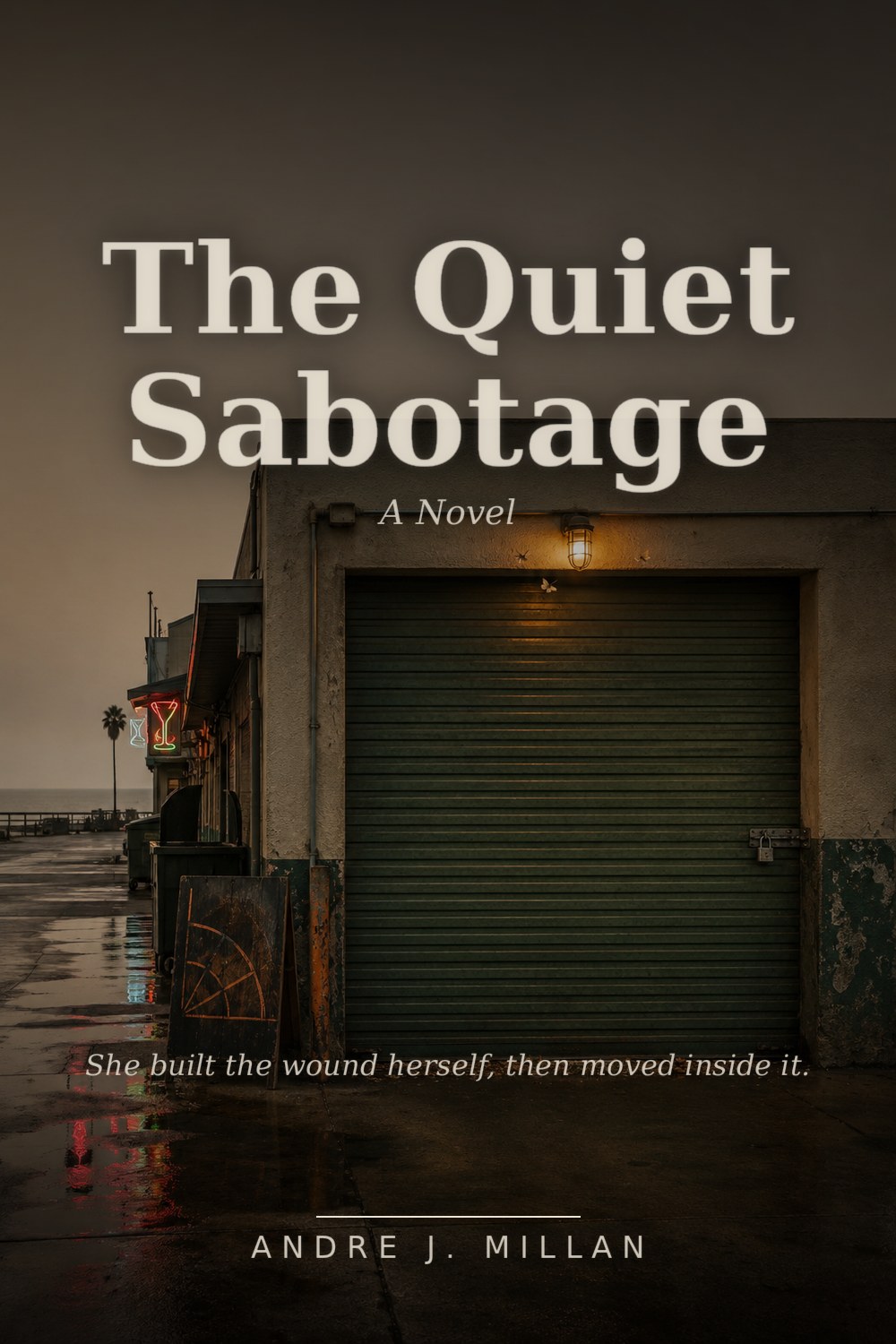
The Quiet Sabotage
A Novel
The storage unit smells like melting plastic and old cardboard. Outside, wildfire smoke is pressing against the district, turning the streetlights amber. Inside, Serene Trumble is sitting on a concrete floor with a document she has hated for eleven years, and she is beginning to understand that she may have read it wrong.
She is a curator. She knows how to date things, authenticate them, establish provenance. What she has never been able to do is look directly at the night her name disappeared from the catalog that was supposed to carry it—the decade of fieldwork, the correspondence, the incremental and unglamorous labor of building something real. She built a story instead. Someone took credit. Someone erased her. That story has organized her life.
The document does not confirm it.
This is not a mystery with a culprit. It is quieter and harder than that. It is the experience of watching a person dismantle the one explanation that made her survivable to herself, in a ten-by-twelve room under fluorescent light, while the air outside grows progressively less breathable. The smoke is not metaphor. It is a deadline. If the district closes before she decides what to do, the catalog goes forward without her name, and the question of whether she deserved that outcome becomes permanently unanswerable.
What Serene has to face is not betrayal. It is the specific loneliness of having punished yourself for someone else's crime and then discovered the crime was yours.
Some people, given the chance to put something right, cannot take it. The description of why is what this book is about.